Click on image to enlarge...
|
Tay's Story:
In 2005 I bought a small antique wooden desk at a local auction, thinking I could repair the broken drawer fronts and refinish the solid oak top to make an unpretentious addition to my library. Modern furniture is seldom solid wood anymore, but is heavy with plastics and glues and micro-thin veneers with a life-expectancy/durability of but a few decades.
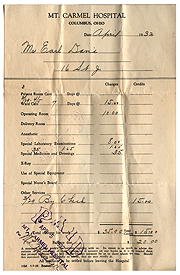
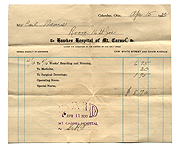
In my shop, when I pulled out the second drawer to re-glue its bottom, Earl Davis appeared unexpectedly, fluttering out of the old desk in three sheets of paper. He had spent more than seventy-five years in the quiet darkness between the boards and, I am sure unknown to him, he carried a message about health care in America.
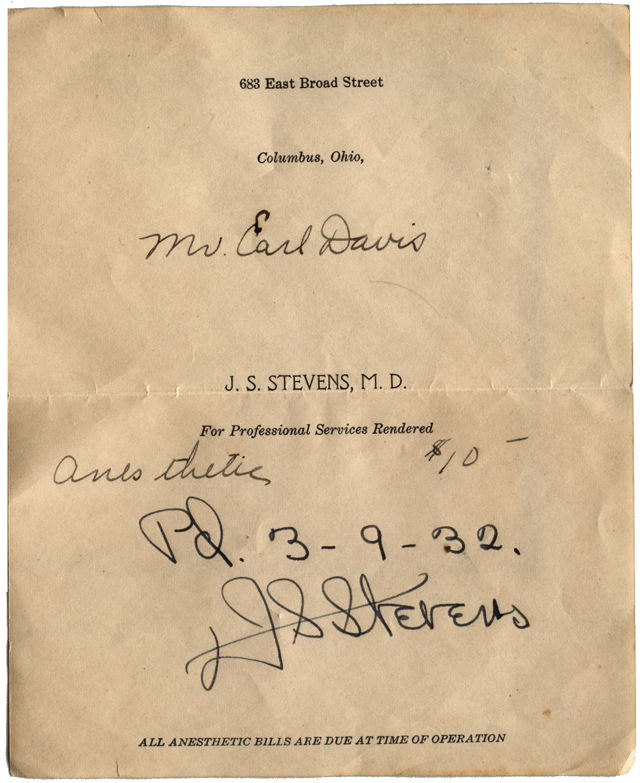
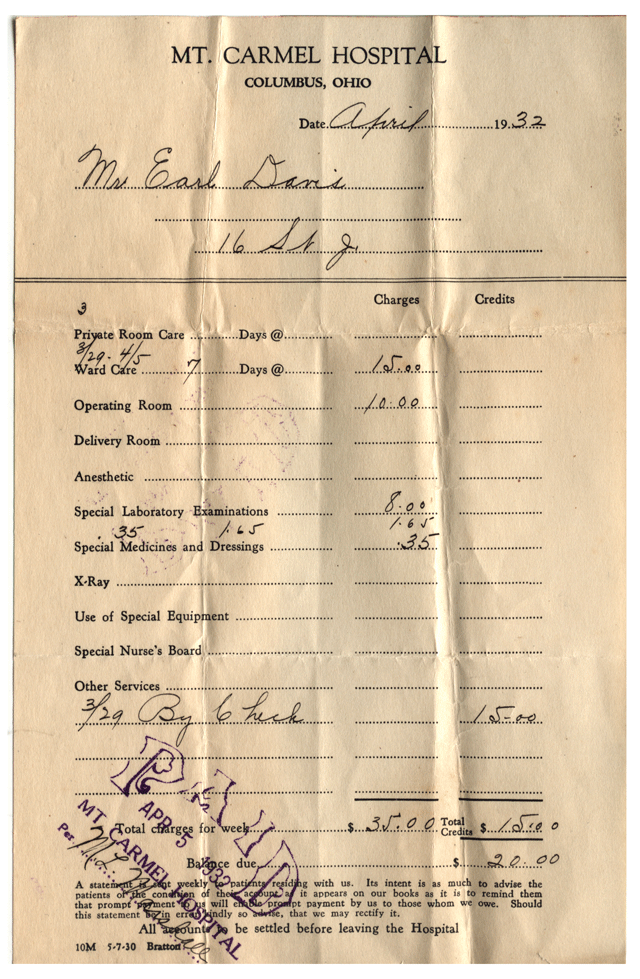
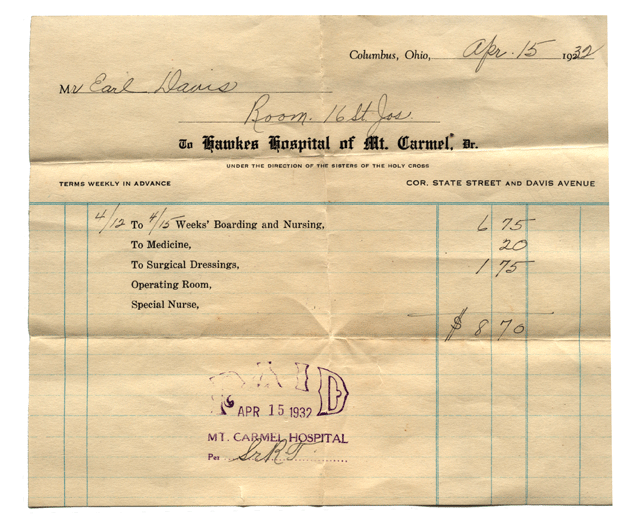
The papers were simple reciepts, paid in full, for medical services rendered by a Dr. Stevens and by Mt. Carmel Hospital in Columbus, Ohio in March and April of 1932. It would seem that Dr. Stevens billed Earl for anesthetic in early March; the hospital billed Earl for a seven-day stay in the ward, not a private room, from March 29 to April 5th; and again for three days from April 12 to 15, 1932. For his first hospital stay, he paid a portion in advance, and all bills were paid on the day of his discharge.
The first and lengthier stay included charges for operating room, special laboratory work, and special medicines and dressings. Likely his doctor and the Sisters of the Holy Cross sent him home to recover from the operation in early April, only to readmit him to the ward with complications ten days later.
As pieces of his story fell into place in my chilly shop, I hoped only that Earl had recovered well from his tribulations that springtime so long ago. I hoped, too, that it was he, not his surviving son or daughter or executor, who had misplaced the papers between the drawers of his desk to await my discovery.
Earl's message to me was clear: in seventy-five years in America, the costs of medical services have risen at a far greater rate than other services, like carpentry or tire changing or mowing hayfields. And hospitals that were once operated as a calling of the Sisters of the Holy Cross or the Sisters of Mercy are now driven by insurance corporations and Health Management Organizations whose interest is to maximize profit to shareholders. Seven days in the hospital, with board and nursing, cost Earl $15.00 in 1932. For my neighbor, who broke six ribs in a recent accident, six days in the hospital for pain and breathing management (no surgery) cost more than $20,000.00.
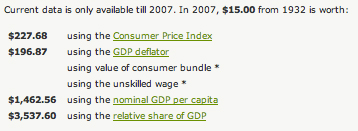
Visit Ways to Compute the Relative Value of a U.S. Dollar Amount, 1790 to Present.
|